Showing posts with label Making Music. Show all posts

Sunday, October 26, 2025

UYA Live at the Willlow Released on Internet Archive

I am pleased to announce the release of UYA Live at the Willow, Volumes 1 and 2. Originally released on two audio cassettes in 1992, the original files were remastered by Rodger Coleman in 2019, and it's taken me this long to get them up on the Internet Archive. Such is life. UYA (also known as Upstanding Young Americans, after our eponymous first album) was active in Boston from 1988 to 1995. Live at the Willow was our second release, and to my ears is far better than the studio CD. Easy to stream, but if you're so inclined, I recommend downloading the wav files and cranking them. Here are some details:

UYA (a/k/a UPSTANDING YOUNG AMERICANS):


Sam Byrd: drums, percussion toys, vocals, turntable, etc.

Rodger Coleman: guitar, bass, percussion, toy sampler, turntable, etc.

Steven Forrey: trumpet, bass, percussion, vocals, turntable, etc.

Eric Hipp: tenor saxophone, flute, percussion, vocals, turntable, etc.

*Christopher Murray: keyboards, bass, percussion, turntable, etc.  


Recorded live to 4-track at the Willow Jazz Club, Somerville, Massachusetts on October 11, 1992, by Rodger Coleman with Christopher Murray. Remixed by UYA at High Noon Studio, Belmont MA, on February 12, 1994.


Originally released on cassette (Live at the Willow Vols. 1-2) (Voidville Records) in 1994. Remastered by Rodger Coleman in 2019.


UYA played several times at the Willow Jazz Club, the venerable Somerville MA nightspot that was home to weekly performances of the Fringe for many years.  UYA usually played multiple long sets over the course of an evening, with guests (including Christopher Murray, John Medeski, and John Dirac) often joining in.  The band loved playing there; the club's narrow structure, mirrored walls, and lack of a stage meant that the band was pretty much right in the audience's lap, making for an intimate (if imposing) atmosphere of high-intensity music.


UYA Live at the Willow, which captures most of a show from October 11, 1992, is fairly typical of the range of the band at the time: original compositions as well as jazz covers and improvisations played in a heady mélange of free jazz, funk stylings, and driving rock, infused with punk energy, turntable hijinx, and harmolodic giddiness.  


A brief history of UYA


UYA was formed in Boston in 1988. Rodger Coleman, Steven Forrey, and Eric Hipp were students at the New England Conservatory of Music. Sam Byrd had just moved up to the Boston area from Richmond, Va. to work at MIT. After some intense rehearsing, UYA began gigging around town. In 1990, they recorded their first CD, Upstanding Young Americans, at Harp Studio in Braintree, MA.


The CD was well-received, with positive reviews from the Boston Phoenix, the Boston Globe, the Village Voice, Cadence, and Option. It was nominated for "Outstanding Jazz Album (Indie Label)" in the 1991 Boston Music Awards. UYA was also nominated for "Best Local Jazz Act" in the 1991 Boston Phoenix/WFNX Best Music Poll.


The band began spreading their performance sphere a bit wider, playing several times at the (old) Knitting Factory in NYC and sporadically in New Jersey and Rhode Island. Multi-instrumentalist Christopher Murray joined the band full-time in 1993. UYA Live at the Willow was their second official release. In 1995 they contributed the opening track, "Dancing Shadows," to the Sun Ra tribute CD Wavelength Infinity


Eventually UYA worked on a second studio album, but it fell apart in the mixing sessions and was never released. The band broke up in 1995. Steven Forrey went on to perform with Mundo Clave. Eric Hipp played with Free Range Rat and Club D'Elf.  Rodger Coleman relocated to Nashville, where he has worked on solo and collaborative projects. He and Sam Byrd have continued to record and perform as a duo. Byrd is also a founding member of the Richmond VA free improv band New Ting.


UYA 

Live At The Willow, Vol. 1

https://archive.org/details/UYA_Live_at_the_Willow_Vol_1


1. Ed, Son of America (Steve Forrey) (6:46)*

2. Hijack> (James Blood Ulmer) (4:42)

3. Wynston Take Note (Sam Byrd) (4:54)

4. Afro Blue (Mongo Santamaria) (13:27)*

5. Jive Surrey Women (Eric Hipp) (5:15)

6. Tales of Tillie (UYA) (21:28)


UYA 

Live At The Willow, Vol. 2

https://archive.org/details/UYA_Live_at_the_Willow_Vol_2 


1. Sleep Talk (Ornette Coleman) (6:25)

2. Hail to the Chief> (8:35)*

3. Election Day (Eric Hipp) (4:39)*

4. I Dreamed A Connection (Steve Forrey) (12:14)*

5. Vertical Responsibility Paradigm (Eric Hipp) (12:14)

6. Broadway Blues (Ornette Coleman) (7:21)*

Saturday, May 25, 2024

Playing with Marshall Allen (Happy Birthday!)

I haven't really written about this experience much, but I will take the opportunity of Marshall Allen's 100th birthday today (here's to many more!) to say a little about the experience of playing with him, back in 2007 in Richmond. New Ting bandmate Tim Harding set it up, and Marshall Allen, Thomas Stanley, and Elliott Levin came down to RVA for two sets of improvisation. This was definitely one of the highlights of my musical life. We had some time to hang out a little beforehand, went out to eat, talked some, but didn't talk at all about the music we were going to play. I did get the chance to ask him about "The Shadow World" and how tricky that piece was, and he said, "well, it's in 7/4." All you need to know, I guess! And we sang the head to each other (the beginning of it, anyway). 

When the time came, we just started playing. And I have to say: it was a spiritual experience for me. When Marshall started soloing, and those rippling waves of energy and sonic exuberance hit my ears, I was electrified and transformed and almost damn near forgot -I- was actually playing drums with him! He split his time about half and half between alto sax and EVI, plus a smattering of flute. I was transported to other realms, seriously: that other, better world. We started off as a quartet, and here's a little rough video snippet of that (unfortunately, not much Marshall):


For the second set, we were joined by Thomas Stanley, another bass player, and a female vocalist. Not as transcendent as the first set, to me, but still pretty mind-blowing. And then it was over.

I did have the opportunity to play with Marshall one more time, this time up in DC in 2010, in a band called Marshall Allen and the Vertical Dogs, along with Danny Ray Thompson, Jimmy Ghaphery, Tim, and a DC bassist and second drummer. It was big fun, of course, but nothing will replace that first time.

I talked to Marshall a few years later when the Sun Ra Arkestra played the Richmond Folk Festival. I think he remembered me, but hey, I'll give him a pass if he didn't --- hell, he was 83 when we first played!

So again, happy birthday, Marshall, and know that the years and hours of music you've given us all, with and without Sun Ra, can never be surpassed. Peace.

Thursday, February 24, 2022

Improvisation and Meditation


Great writing about improvisation, from Taylor Ho Bynum's excellent essay on the new Cecil Taylor release from 1973. The context is Cecil, but the notion is universal:

There is an element of improvisation, especially when so expertly realized, that is akin to meditation. You are aware of all the thoughts floating through your head but continually letting them go to connect to the present moment, as a performer and a listener. Thoughts, fears, anxieties all inevitably arise—the brain does work at a furious pace—and by welcoming them, accepting them, articulating them, we can let them go. We can work out the puzzles of our own minds, embrace the unknowable together until it’s transformed into a creativity that needs no definition. (Taylor Ho Bynum, "Forty-Four Thoughts for Cecil Taylor," The Baffler (2022-02-22)

Monday, October 25, 2021

New RAIC album "Gestalt"


I am proud to appear on two tracks on Gestalt, the newest CD from RAIC... one of the tracks, "The Intergalactic Church of Kirk," is a repurposed outtake from the Ask the Trees sessions... it was also chosen as a track for the latest Wire Tapper... the other track I am on, the title cut, is a 15-minute improvisational epic with three drummers: Samuel Goff, Scott Clark, and myself... the rest of the CD is pretty nifty as well... standout tracks include "Baroche" with Laura Morina on vocals, and the lovely country tune "Three Sides to the Story"... all told, four of the members of New Ting appear on several tracks... 

Thursday, October 21, 2021

Gig This Saturday


I'll be joining Jimmy Ghaphery (of New Ting) and Robert Andrew Scott (of RAIC) to supply some of the live music for this art auction at Studio Two Three in RVA this Saturday.  Should be..... quiet! 

Friday, November 1, 2019

Video of New Ting at Shockoe Denim


New Ting at Shockoe Denim, 2019-10-17. Full audio here. Thanks, Katie, for the video!

Wednesday, October 23, 2019

Ask the Trees: New Release on Bandcamp: The Heart's Message Cannot Be Delivered in Words


photo by Randy Reus

I am pleased to be a part of this new release: The Heart's Message Cannot Be Delivered in Words. This was a project put together by RAIC saxophonist Erik Schroeder, under the group name Ask the Trees. It was wonderful to play this free nature-inspired post-Coltrane jazz with Erik and two other members of New Ting, Jimmy Ghaphery and Fred McGann.

Tuesday, October 22, 2019

Photos from the Latest New Ting Gig

Well, from before the gig. It was great playing at Shockoe Denim; it's a wonderful space.

Fred prepares:


Tommy prepares:


Jimmy and Sam are prepared:


Thursday, December 7, 2017

Barbiero-Byrd-Ghaphery Live Set Recording


The recording of the Barbiero-Byrd-Ghaphery trio set at Rhizome last weekend is now up for free streaming and download at Rhizome's page on archive.org. Please check it out! 25 minutes of acoustic free improvisation.

Tuesday, November 28, 2017

Upcoming Gig in DC


A great space for quiet explorations... also loud ones... at any rate, always a pleasure to play with Jimmy and Dan!

Friday, February 12, 2016

Notes on "Making Music"


http://www.dennisdesantis.com/

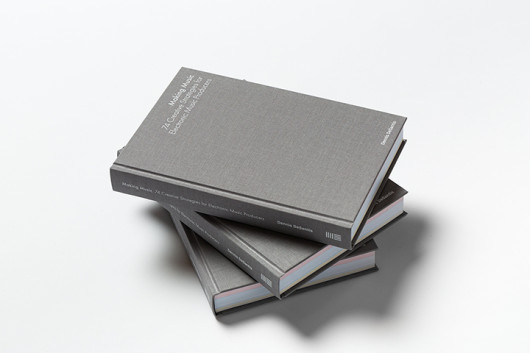
Here are some random and scattered thoughts on Dennis DeSantis' book Making Music: 74 Creative Strategies for Electronic Music Producers. As I said when I finished it, even though the book is aimed at, well, electronic music producers, there's much in it that can apply to all musicians, even improvisers working in areas where overall planning and detailed construction of orchestrated melodies and motifs don't really come into play. Although when I write it that way, it occurs to me that even in improv there's a fair amount of sound construction going on. I do try to aspire to what I think the best improvisers do, which is to improvise compositionally, to build a sense of structure of some sort from the flimsiest of platforms: thin air.

So DeSantis' book is organized around a series of possible problems and practical solutions to those problems, which is  a nice way to get at many of the snags and hitches that can arise during the creative process. For example, in "Drums to Pitches and Vice Versa" (p. 194), he writes about the problem of coming up with appropriate melodic or harmonic ideas for already-existing drum patterns (or vice versa). One idea he offers is to use a melodic line for one instrument (say, bass) to trigger patterns from entirely different instruments (say, drums). How does that apply to my playing drums in an improvised context? Simply this: I listen closely to what the other players are doing, and sometimes emulate their lines (or sounds) on the drums. It doesn't match exactly, of course, but the inspiration is there and ready to expound on. I didn't need DeSantis to make me think of this; it's something I've developed on my own--but DeSantis does make me consider that process and how it fits into my improvisational toolkit.

A related idea he has is increasing your supply of rhythmic ideas by creating random loops from different sources and emulating the patterns that emerge  ("Implied Rhythms in Short Loops," p. 146). Now this is something I have toyed with in the past but not pursued with focus. Reading about it will help me to be more aware of the rhythms and sounds around me, and while I won't be capturing any sounds out in the wild to make loops with, I will be listening for patterns and beats I can incorporate into my playing.

Two interesting concepts he deals with directly apply to some of the directions I've taken with my playing over the last few years: "Avoidance List" (p. 26) and "Arbitrary Constraints" (p. 42). If  you find your music getting in a rut, repeating the same ideas, he suggests breaking the music down into its various components ("attributes") and experimenting with creating music while avoiding some of them. Similarly, you can try applying certain constraints on your music before you even begin (he suggests things like making every sound from one sample). I have pursued solutions like these by reducing my kit in various ways, sometimes limiting myself to just a floor tom and a cymbal, or just snare and hi-hat. Granted, sometimes this has been for practical reasons (it's hard to justify lugging the entire kit for a 15-minute gig!), but for a while there I was doing it purposefully. It definitely broadened my horizons, forcing me to explore different sonic possibilities with a limited set of sound sources. I was influenced  in this direction by the example of Ian Davis, who I saw one time sit behind his whole kit and only play chains on top of his snare for an entire 45-minute set, all the while making it interesting and musical. I have often found myself limiting my playing to certain pieces of the kit even when I have all of it in front of me. Of course, it doesn't always work: once I decided to only play what I could find in an old suitcase of second-tier discarded toys and percussion instruments I'd recently rediscovered that'd been in the attic for years. Turned out they'd been in the attic for a reason--but that's experimentation for you.

Of course, not all of DeSantis' suggestions work for me, which is only natural. For example, "Write drunk; edit sober" (p. 46), while wonderful advice for a producer, doesn't really work for me with improv: there, I've got to do my editing on the spot, and the challenge is to do that while, if not drunk, then pleasantly buzzed...on the music. Overall, though, Making Music is a great way to jump start different thought processes on the whole wonderful activity.