Showing posts with label John Gilmore. Show all posts

Monday, August 17, 2026

Playlist, Week of 2026-08-16


I hope the lineup of Kim Cass's Levs proves to be more than a one-off... I really enjoy Charlie Parker on tenor... he's not as comfortable with it, and so his playing is less fluid... but it's still monstrously swinging... The Cecil Taylor big band music is endlessly nourishing... "If music be the food of love, play on"... Still continuing to be blown away by the majestic Sun Ra release Somewhere Over the Rainbow... especially all the new John Gilmore solos... 

Playlist 2026-08-17:

*Art Ensemble: 1967/68 (disc 4) "Number 2 - Quartet Version Take 7"
*Art Ensemble of Chicago: Kabalaba (pt. 1)
*Beatles: Something New (side 2)
*Beatles: Yesterday and Today (sides 1, 2)
*Anthony Braxton/Richard Teitelbaum: Silence/Time Zones:  "Crossing (Dedicated To Roscoe Mitchell)"
*Kim Cass: Levs
*Frédéric Chopin: 24 Preludes Op. 28/Sonata No. 2, Op. 35/Polonaise, Op. 53 (Evgeny Kissin)
*Gerald Cleaver: Adjust
*John Coltrane: Giant Steps (side 2)
*Miles Davis: Complete Birth of the Cool
*Miles Davis: Collector's Items (side 2)
*Deerhoof: Future Teenage Cave Artists
*Deerhoof: Miracle-Level
*Duke Ellington: The Complete 1932-1940 Brunswick, Columbia and Master Recordings of Duke Ellington and His Famous Orchestra (disc 11)
*Duke Ellington: Live in Mexico "The Mexican Suite"
*Grateful Dead: 1981-05-01 Hampton VA (CDR) (disc 2)
*Charlie Haden: Liberation Music Orchestra (side 1)
*Ingrid Laubrock: Monochromes
*Ingrid Laubrock/Kris Davis: Blood Moon
*James Brandon Lewis: An Unruly Manifesto
*London Jazz Composers Orchestra featuring Anthony Braxton: 1988-03-25 Basel, Switzerland (CDR) (disc 2) "Unidentified Barry Guy Composition"
*Monstrance: Monstrance (disc 2)
*New Ting: 2027-07-27 "Horse for Au Pair" (wav)
*OM: It's About Time
*Tony Oxley Quintet: Angular Apron
*Charlie Parker: The Complete Savoy and Dial Studio Recordings 1944-1948 (disc 5)
*Soft Machine: Floating World Live
*Sun Ra and His Space Arkestra: What Planet Is This? (disc 1)
*Sun Ra: Somewhere Over the Rainbow (Strut) (disc 1)
*Sun Ra and His Omniverse Jet-Set Arkestra: 1980-12-31 Detroit (CDR) (disc 7)
*Sun Ra: Inside the Light World: Sun Ra Meets the OVC (side 1)
*Cecil Taylor: Fragments: The Complete 1969 Salle Pleyel Concerts (disc 1)
*Cecil Taylor Unit: 1979-03-15 WKCR, NYC (CDR) track 1
*Cecil Taylor Orchestra Humane: At Iridium 2004 (discs 13, 14)
*UYA: 1995-03-16 Touch Module (wav)
*Various artists: Stax Singles Vol. 4: Rarities and the Best of the Rest (disc 2)
*Stevie Wonder: 1979-12-18 Secret Life of Plants Tour, Pasadena CA (CDR) (disc 1)
*Robert Wyatt: Shleep 

Monday, May 11, 2026

Playlist, Week of 2026-05-10

Nice playing from Daniel Barbiero on Moon in Winter... It's been while since I revisited Quartet (New Haven) 2014... it's great hearing Nels Cline and Greg Saunier in the context of Braxton... I'd love a reprise, Mr. Braxton... John Gilmore shines like a golden beacon of sound on Dizzy Reece's From In to Out... Still working my way through the remarkable run of George Lewis replacing Lester Bowie in the Art Ensemble of Chicago at Storyville in 1977... 

Playlist 2026-05-11:

*Rashied Ali Quartet: New Directions in Modern Music (side 1)
*Art Ensemble of Chicago: 1977-07-30 NYC (CDR) (disc 1)
*Ayumi Ishito: Ayumi Ishito and the Spacemen, Vol. 1
*Béla Bartók: 6 String Quartets (Emerson String Quartet) (disc 2)
*Anthony Braxton: Quartet (England) 1985 (disc 2)
*Anthony Braxton: Quartet (New Haven) 2014 (disc 1)
*Will Bryce/Sam Byrd/Jimmy Ghaphery: 2026-05-02 RVA (CDR)
*Daniel Carter: Open Question, Vol. 1
*Andrea Centazzo: Moon in Winter
*Nels Cline: Dirty Baby (disc 2)
*Ornette Coleman: Beauty Is a Rare Thing: The Complete Atlantic Recordings (disc 3)
*John Coltrane/Don Cherry: The Avant-Garde
*Deerhoof: Miracle-Level
*Deerhoof: Deerhoof and the Sound Sanctuary
*Bob Dylan/Various artists: Theme Time Radio Hour S02 E54: California
*Duke Ellington: Midnight in Paris
*Duke Ellington and Count Basie: First Time! The Count Meets the Duke
*Duke Ellington and His Orchestra: Latin American Suite
*Entropic Hop: Live at Downtown Music Gallery
*Grateful Dead: 1974-10-18 Winterland, SF (CDR) "Seastones Jam > Dark Star"
*Grateful Dead: The Closing Of Winterland: December 31, 1978 (disc 4) "Dark Star > The Other One > Dark Star"
*Grateful Dead: 1979-01-10 Nassau NY (CDR) "Dark Star"
*Jefferson Pilot: Spirit of '77
*Rob Mazurek Exploding Star Orchestra/Small Unit: Spectral Fiction
*Sergio Mendes and Brasil '66: Crystal Illusions
*New Ting: 2026-05-04 "Watering Can Holler"
*Angelika Niescier: Chicago Tapes
*OOIOO: The Horizon Spiral
*Eddie Prévost et al.: The Secret Handshake With Danger, Vol. 2
*Dizzy Reece: From In to Out
*Santana: Caravanserai
*Santana: Welcome
*Archie Shepp: The Magic of Ju-Ju (side 1)
*Tyshawn Sorey: Alloy "Movement"
*Sparks: Whomp That Sucker (side 1)
*Sun Ra: Jazz by Sun Ra, Vol. 1 [Sun Song]
*Sun Ra & His Arkestra: The Cymbals​/​Symbols Sessions (New York City 1973) (disc 2)
*Sun Ra and His Omniverse Jet-Set Arkestra: 1980-12-28 Detroit (CDR) (disc 5)
*Sun Ra and His Arkestra: Saturn XIII (sides 1, 2)
*Cecil Taylor Orchestra of Two Continents: 1984-10-20 Rubigen, Switzerland (CDR) (disc 2)
*Various artists: Rockabilly (disc 1)
*Alex Ward Item 10: Volition (Live At Cafe Oto) "Volition"

Friday, July 11, 2025

Review of Sun Ra: "Nuits de la Fondation Maeght"


 Sun Ra and His Inter-Galactic Research Arkestra: Nuits de la Fondation Maeght (Strut/Art Yard)

It was Sun Ra and the Arkestra's first trip to Europe, and they were loaded for bear. For two glorious nights in the Côte d'Azur region of France (August 3 and 5, 1970), they regaled stunned audiences with hours-long extravaganzas of highly original music, dance, visual spectacle, and "myth-world splendor."  Astonishingly, even with three LPs' (or two CDs') worth of music per evening, this new release isn't everything; between the two nights' concerts over twelve hours were recorded! That being said, this release is a generous helping of music, with little overlap of material, and what overlap there is is highly revealing, giving an idea of how unique each take truly was. Two albums from these shows were originally released in 1971 on Shandar, and all of that material is here, but the additional material adds up to over twice as much, making this an indispensable addition to the canon. Of the original content from the Shandar records, the only real difference is that "The Cosmic Explorer" is for some reason chopped into two tracks, losing about six minutes in the process. Other than that, all of the old content is intact, and to my ears sounds fresher and cleaner.

Like many other Arkestra performances of the early '70s, there's a lot of pageantry and (presumably) dancing, wild solo synthesizer, and lengthy percussion interludes--but not so much of the cosmo-drama preaching that would soon become so prominent. Instead, we are given a bounty of great grooves, new takes on old classics, and excellent playing all around. The alternate versions of compositions already present on Shandar, such as "Friendly Galaxy 2," "Spontaneous Simplicity," and "The Shadow World," are always interesting. Unfortunately, for the latter piece only an excerpt is given in the alternate version… but what an excerpt it is: another excellent John Gilmore solo!

There are several pieces well known to Ra fans that didn't make it on the original release, such as "Why Go to the Moon?" and "We Travel the Spaceways." Several of these songs seamlessly morph into long improvisations, such as the August 5 version of "Calling Planet Earth." "Next Stop Mars" is essentially a four-minute Moog solo, and the second iteration of "The Satellites Are Spinning" arises out of a choice Ra organ solo. "They'll Come Back" is given a definitive reading, following June Tyson's brilliant vocals with a full-band tour of the melody, stressing its processional majesty.

Most excitingly, there are a handful of compositions that are rare or (as far as I can tell) unique. "Pleasant Twilight" only appears two other times in the discography (My Brother the Wind Vol. II and the Red Garter show from 1970). In 1970, Gilmore was featured in an amazing solo that ranks as one of his finest. He solos here too, but he's underrecorded (the only time on this set). The fast groove at the end after the tempo picks back up stretches out longer than the Red Garter version, giving time for great solos from Kwame Hadi, Marshall Allen, Ra on organ, and a rare solo spot from Danny Ray Thompson, all punctuated by swinging horn riffs.

The slow Discipline-like "Myth Tone Poem (Untitled)" also appears in two other places I know of: the Newport Jazz Festival of 1969-07-03, and the CD Black Myth/Out in Space, on the Berlin set from 1970-11-07, as "Discipline Series" (presumably titled by Hartmut Geerken). But both "Space Bop (Untitled)" and "Space Ballad (Untitled)" make their only appearances here (well, the jury's still out on "Space Ballad"--I feel like I've heard it before but I haven't been able to pinpoint it for sure yet--more research needed!). Both tunes are true gems: "Space Bop" is a swinging showcase for superb solos from Kwame Hadi and Danny Davis, and "Space Ballad" is another almost-dirge-like piece that would easily fit into the mold of the later "Discipline" compositions still to come in the '70s.

We are even treated to one standard, Henry Mancini's "Days of Wine and Roses," a song that won't appear in the Ra discography again until 1983. Here it's a bit ragged in execution, but redeemed by Ra's soulful organ. Let me just say at this point that Ra's keyboard work sounds fantastic throughout this whole set.

The Arkestra was clearly primed for these performances, and it shows: the ensemble heads are tight (and loose when they need to be), and the solos are consistently exciting and mind-blowing (especially those from Gilmore, Ra, Marshall Allen, Danny Davis, Pat Patrick and Kwame Hadi). June Tyson is on fire, her vocals stirring and inspiring; indeed, this album serves as exhibit #1 demonstrating how integral she was in fronting the Arkestra and serving as an earthly guidepost to Ra's cosmic aspirations. There are several excellent Gilmore solos here, including "Outer Spaceways Incorporated," which segues into "You Better Get Ready," a gospel-tinged salute from the band to the saxophonist, who wails throughout.

Overall, this is an amazing release; Strut and Art Yard are to be commended on another excellent job. The vinyl set features a handsome booklet with several gorgeous black-and-white photos and liner notes with contextual background from Daniel Caux, the organizer of the concerts, and extensive track-by-track commentary by Peter Griffiths. Hang on to your original release of Vol. 1 for the complete "Cosmic Explorer," but otherwise chalk this up as a must-have.

Tuesday, April 1, 2025

Henry Threadgill on John Gilmore


Henry Threadgill writes about John Gilmore:

He was playing some very advanced harmonic and rhythmic information on the saxophone. His rhythmic approach was amazing. John used to tell me about practicing out of drum books, working on rhythmic patterns. ... It gives you a grounding in rhythmic patterns that you wouldn't ordinarily have, playing a melodic instrument. Gilmore's playing was very rhythmic playing. I don't meant that it was necessarily always busy, even if at times it was. It's more that there were very unusual rhythmic patterns in his playing. A lot of people knew about his musical thinking; Coltrane used to come and listen to him play. Gilmore was a highly sophisticated player, and totally original. (Threadgill, Easily Slip into Another World, Knopf 2023, p. 37)
 

Monday, November 18, 2024

Playlist, Week of 2024-11-17

We Are on the Edge just gets better and better every time I listen to it... a true landmark record... Nice to have more Charlie Parker but nothing earth-shattering or revelatory on Bird in Kansas City... Brilliant piano trio playing from Matt Mitchell, but from him I expect no less... Revisiting old favorites: Juju: comfort food for the ears... Joe Henderson rocking it on Unity... John Gilmore smoking on Music from Tomorrow's World... I had it in my mind that he didn't solo so much on the Majestic session, but he definitely does, especially on "Possession"... that whole CD is damn revelatory, and explores whole sides of Sun Ra not heard elsewhere... specifically, live 1960 Arkestra and the superlative arrangements on the Majestic session (more florid and worked-out than the Transition albums)... 

Playlist 2024-11-18:

*Art Ensemble of Chicago: We Are on the Edge: A 50th Anniversary Celebration (disc 1)
*Beatles: Real Love (maxi CD single)
*Paul Bley/Evan Parker/Barre Phillips: Time Will Tell
*John Blum Quartet feat. Marshall Allen: Deep Space
*Kim Cass: Levs
*George Clinton/P-Funk All Stars: How Late Do U Have 2BB4UR Absent? (disc 1)
*John Coltrane: The Prestige Recordings (disc 15)
*Miles Davis: Miles at the Fillmore: Miles Davis 1970: The Bootleg Series Vol. 3 (disc 1)
*Bob Dylan: Together Through Life
*Bob Dylan: Tempest
*Duke Ellington: The Complete 1936-1940 Variety, Vocalion, and Okeh Small Group Sessions (disc 7)
*Farmers By Nature: Out of This World's Distortions
*Agustí Fernández Ensemble: Via Augusta
*Forebrace: Steeped
*Grateful Dead: 1989-10-09 Hampton VA (CDR) "Dark Star"
*Mary Halvorson: Reverse Blue
*Hatfield and the North: The Manor Demos
*Alexander Hawkins Trio: Carnival Celestial
*Dave Holland New Quartet: 2023-07-13 Pori, Finland (CDR)
*Jackie McLean: Action
*Matt Mitchell: Zealous Angles
*Roscoe Mitchell's Cards For Orchestra Project: 2009-08-30 Sant'Anna Arresi, Italy (CDR)
*Roscoe Mitchell: Conversations II
*New Ting: 2024-11-11 "Wall Hangings and a Crustacean"(wav)
*Charlie Parker: Bird in Kansas City
*David Sancious and Tone: Transformation (The Speed of Love)
*Wayne Shorter: Juju (side 1)
*Sparks: Big Beat (side 2)
*Sun Ra and His Arkestra: Music from Tomorrow's World
*Sun Ra and His Astro Infinity Arkestra: Strange Strings (Expanded Edition) (sides 1, 2)
*Sun Ra and His All-Star Inventions: 1991-11-17 NYC (CDR) (disc 1)
*Sun Ra: Saturn Research: Rarities and Oddities (CDR compilation) (discs 1, 2)
*Craig Taborn/Tomeka Reid/Ches Smith: 2023-03-05 Vienna (CDR)
*Sharon Tandy: You Gotta Believe It's... Sharon Tandy
*Cecil Taylor Unit: 1966-11-30 Paris (CDR)
*Thumbscrew: Wingbeats
*Lennie Tristano: Personal Recordings 1946-1970 (disc 5)
*Anna Webber: Shimmer Wince
*Anna Webber: simpletrio2000
*Larry Young: Unity

Tuesday, September 10, 2024

Playlist, Week of 2024-09-01

Found a nice used copy of Pete La Roca Sims' LP Turkish Women at the Bath (in the version released under Chick Corea's name, Bliss!), featuring some choice John Gilmore... always interesting to hear Gilmore in a non-Sun Ra context, although I still maintain that he did his best work with Ra... Someday I'll compile a list of favorite non-Ra Gilmore solos to go along with my other Gilmore list... 

Playlist 2024-09-09:

*Tim Berne's Snakeoil: Shadow Man "OC/DC"
*Anthony Braxton: Quartet (New Haven) 2014 (disc 1)
*James Brown: Star Time (disc 2)
*Claypool Lennon Delirium: Monolith of Phobos
*Coxhill Sinclair Band: 1975-11-21 Reims, France (CDR)
*Miles Davis: The Prestige 10-Inch LP Collection, Vol. 2 (LP 4: side 1)
*Miles Davis: Chronicle: The Complete Prestige Recordings 1951–1956 (disc 4)
*Miles Davis: Collector's Items (side 4)
*Miles Davis: Kind of Blue (side 1)
*Miles Davis Quintet: Miles Smiles
*Digital Underground: Sex Packets
*Bob Dylan: Live 1964: Concert At Philharmonic Hall (disc 1)
*Duke Ellington: All Star Road Band
*Grateful Dead: 1991-06-17 East Rutherford NJ (CDR) (discs 2, 3)
*Jimi Hendrix Experience: Axis: Bold as Love (side 2)
*Jazz Composer's Orchestra: The Jazz Composer's Orchestra
*Mars Volta: The Bedlam In Goliath
*Roscoe Mitchell: Conversations
*Roscoe Mitchell/Montreal-Toronto Art Orchestra: Ride the Wind
*New Ting: 2019-10-07 "We All Answered" (wav)
*Sean O'Hagan: Radum Calls, Radum Calls
*Elvis Presley: The Complete Elvis Presley Masters (disc 3)
*Prince: 1982-03-08 First Avenue, Minneapolis (CDR)
*Rascals: Once Upon a Dream
*Rascals: Freedom Suite
*Pete La Roca Sims: Turkish Women at the Bath (sides 1, 2)
* 夢遊病者 [Sleepwalker]: 5772
* 夢遊病者 [Sleepwalker]: Skopofoboexoskelett
*Tyshawn Sorey: Unfiltered (disc 2)
*Sun Ra and His Myth Science Arkestra: When Sun Comes Out (side 1)
*Sun Ra: Astro Black (side 2)
*Cecil Taylor: Unit Structures (side 2)
*Cecil Taylor: Student Studies
*Cecil Taylor: Cecil Taylor Unit (side 1)
*Lennie Tristano: Personal Recordings 1946-1970 (disc 2)
*McCoy Tyner: The Real McCoy (side 2)
*Alex Ward: Gated
*John Zorn/Simulacrum: Simulacrum
*John Zorn: The Painted Bird

Monday, August 26, 2024

Playlist, Week of 2024-08-25

Primo Gilmore on Taking a Chance on Chances, especially side 2... I was a little disappointed when Prophet first came out, but I have to say it's growing on me... There's not enough large-ensemble Cecil Taylor in the world... Anyway, this week, it was mostly Sun Ra, Cecil, and Prince... 

Playlist 2024-08-28:

*Area: Maledetti (Maudits) (sides 1, 2)
*Borderlands Trio: Rewilder (disc 1)
*John Carter Octet: Dauwhe
*John Carter: Castles of Ghana
*Grateful Dead: 1973-03-26 Baltimore (CDR) "Truckin'"
*Mary Halvorson: 2009-06-28 NYC (CDR)
*Billy Hart: Enchance (side 1)
*Rob Mazurek Exploding Star Orchestra: Galactic Parables: Vol. 1 (disc 2)
*New Ting: 2024-08-19 Richmond VA (wav)
*Prince: 1981-12-20 Houston (CDR)
*Prince: 2009-07-18 Montreux Jazz Festival (CDR) (disc 2)
*Prince: Small Club Jams (CDR compilation)
*Ravi Shankar: The Sounds of India
*Matthew Shipp Trio: The Trio Plays Ware
*Sun Ra and His Blue Universe Arkestra: Universe in Blue
*Sun Ra and His Arkestra: Taking a Chance on Chances
*Sun Ra: Of Mythic Worlds
*Sun Ra: Ra to the Rescue
*Sun Ra Arkestra: 1986-02-06 Toronto (CDR) (disc 4)
*Sun Ra and His Arkestra: Prophet
*Sun Ra Arkestra: 1986-10-11 Washington DC (CDR) (discs 1, 2, 3)
*Horace Tapscott: The Dark Tree 1 & 2 (disc 2)
*Cecil Taylor: 1983-07-27 Genoa (wav)
*Cecil Taylor/Music from Two Continents: 1984-10-27 Belfort, France (wav)
*Cecil Taylor and the Sound Vision Orchestra: 2002-06-21 Knitting Factory NYC (CDR) (disc 3)
*Cecil Taylor/Tony Oxley: 2003-11-07 Berlin (wav)
*Cecil Taylor/Tony Oxley: 2008-02-24 Vienna (CDR) (discs 1, 2)
*Henry Threadgill Zooid: Poof

Monday, July 31, 2023

Playlist, Week of 2023-07-30

It's pretty overwhelming to write about even one of these fantastic new releases, much less both of them in the same week... suffice it to say that this is the best version of Sun Ra's Jazz in Silhouette we've ever had, with several tracks being released for the first time on vinyl in stereo, and the added bonus of Sound Sun Pleasure tracks from the same 1959 session, also in stereo... plus a brilliant John Gilmore solo on the bonus track "Blues from Saturn"... just essential... The treasure of hitherto undiscovered Coltrane live tracks from the Village Gate in 1961 is more than anyone could ever expect for 2023... Elvin Jones's bass drum is the pulse from paradise, Dolphy's solos are incandescent, and Coltrane is...well, 1961 live Coltrane, hot damn... and the only live version of "Africa?" What heaven is this?

Playlist 2023-07-30: 

*Anthony Braxton: Alumni Orchestra (Wesleyan) 2005
*Anthony Braxton: Composition No. 46 (+168 and Language Music)
*Peter Brötzmann Octet: The Complete Machine Gun Sessions "Machine Gun" live
*Rodger Coleman and Sam Byrd: 2023-07-17 Nashville (wav)
*John Coltrane: Evenings at the Village Gate (sides 1, 2, 3, 4)
*Duke Ellington: Dance Date Air Force U.S.A. March 1958 (sides 1, 2)
*Duke Ellington and His Orchestra: Such Sweet Thunder (sides 1, 2)
*Duke Ellington and His Orchestra: 1959-10-09 Zurich (CDR)
*Duke Ellington and His Orchestra: Featuring Paul Gonsalves (sides 1, 2)
*Grateful Dead: Road Trips Vol. 1 No. 3 (1971) (disc 3)
*Grateful Dead: Dave's Picks Vol. 22 (1971-12-07 Felt Forum, NYC) (discs 1, 2)
*Grateful Dead: Blues for Allah
*Lionel Hampton: The Complete Lionel Hampton Victor Sessions 1937-1941 (disc 3)
*Charles Mingus: Mingus in Europe Vol. 1 (sides 1, 2)
*Roscoe Mitchell: Roscoe Mitchell Orchestra and Space Trio at the Fault Zone Festival
*New Ting: 2023-05-15 Bandito's, Richmond VA (wav)
*Queens of the Stone Age: Lullabies To Paralyze
*Sun Ra and His Arkestra: Jazz in Silhouette (Expanded Edition) (sides 1, 2, 3, 4)
*Sun Ra: Astro Black (side 2)
*Sun Ra: Somewhere Over the Rainbow (Beyond Saturn edition) 
*Sun Ra: Disco 3000 (Complete Milan Concert 1978) (discs 1, 2)
*Sun Ra and His Arkestra: Prophet
*Art Tatum: The Art Tatum Solo Masterpieces Vol. 1
*Cecil Taylor: Looking Ahead! (side 2)
*Cecil Taylor Trio: 1989-02-24 NYC (CDR) (disc 1)
*UYA: 1992-008-05 Wave It Around (wav)
*UYA: 1992-08-12 Found the Key (wav)
*Various artists: Written in Their Soul: The Stax Songwriter Demos (discs 4, 5)
*Dionne Warwick: The Complete 1960s Singles Plus (disc 2) (selections)

Friday, February 24, 2023

Sun Ra: Ellingtonia Vol. 2 - A Quick Review


Well, I got my wish--hot on the heels of the first volume, here is a second Bandcamp compilation of Sun Ra playing Duke Ellington (and Billy Strayhorn, of course) compositions. Like Ellingtonia Vol. 1, Vol. 2 is a mixture of previously released studio tracks and a slew of unreleased gems--live songs, home recordings, and rehearsals. As a compilation, it is wildly successful.

The most primitive recording is a 1950s home tape of Ra playing "Flamingo" on piano and Solovox. It's beautiful. We also get the full-fledged studio version of "Flamingo" from the underrated album The Other Side of the Sun. "Caravan" is a wonderful little version recorded at the Pershing Ballroom in 1958 (where is the rest of this show and why are they keeping it from us?). Ra plays the lead on piano and (maybe?) clavioline, and then there's a heavily dance-oriented percussion interlude. "Sophisticated Lady" is another 1951 duet with bassist Wilbur Ware (again: is there more from this session?).

John Gilmore is featured heavily, which makes the set extra special. "In a Sentimental Mood," a rehearsal piece with Ra on organ, has a nice Gilmore solo but it's a bit recessed--wish it were louder. No problems with Gilmore's volume on "Satin Doll," which is taken at a brisk, swinging pace that's similar in tempo and feel to Ra's arrangements for "Body and Soul." Gilmore turns in a brilliant solo here, starting off with a quote from "I'm Beginning to See the Light" (I feel like maybe Paul Gonsalves did the same thing at one time or another?). "Happy as the Day Is Long" is a snappy Fletcher Henderson-style jump arrangement featuring another nice Gilmore solo.

"Prelude to a Kiss" is presented as it usually was, with a long keyboard solo and a feature slot for Marshall Allen's acerbic alto. There's a nice solo piano rendition of "Take the 'A' Train" from 1977 that's similar to Ra's other piano versions from that year (in particular, WKCR and Venice). I wish the full exact dates could have been given for the live cuts--surely they have them for most pieces here (I understand that the Pershing 1958 exact date may be missing), but only the years are given. For the record, here's what I was able to pin down: "Solitude" (1982-06-24), "Happy as the Day Is Long" (1984-03-24), "Prelude to a Kiss" (1986-06-24), and "Take the 'A' Train" (vocal version) (1987-05-10).

I would quibble with the inclusion of the vocal version of "'A" Train"--surely there are more interesting Arkestra renditions out there (beyond, of course, the sublime version on Live at Montreux)--but maybe that just indicates there are more volumes to come. One can only hope.

Thursday, June 2, 2022

Sun Ra: Ellingtonia Vol. 1 - A Quick Review


The Sun Ra Bandcamp site has just released an excellent new compilation focused on Duke Ellington covers. Those of you who follow my playlists will know that this kind of album is right up my alley, bringing together two of my top big-band composers/arrangers! And this set doesn't disappoint. Almost every selection is previously unreleased. I was familiar with less than half of them, and there are plenty of previously unknown gems here, including a top-notch sax solo from John Gilmore on "Drop Me Off in Harlem." The set starts off with a wonderful rendition of "Duke's Place," a duo from Ra and bassist Wilbur Ware from 1951. Yeah man! ("Duke's Place" is more properly known as "'C' Jam Blues"--it didn't get the name "Duke's Place" until it appeared in a version with vocals in 1958.) "Sophisticated Lady" is a feature for Ra's breezy organ work. "Mood Indigo" is given a more up-tempo swing setting than Duke typically gave it. Two home rehearsal recordings of unknown provenance are "Caravan" and "It Don't Mean a Thing"--these are especially interesting in that unlike most of the tunes here, they were rarely performed by the Arkestra. "East St. Louis Toodle-oo" boasts a great, slinky arrangement that captures the sinuosity of the 1920s originals. Notable for its absence is a version of "Take the 'A' Train"--here's hoping that means that there'll be a Volume 2.

Update: Review of Volume 2 here!

Tuesday, March 29, 2022

Playlist, Week of 2022-03-27


Space Aura is space gold from Sun Ra... Amazing that they dug up these 1966 recordings from the same tour as Nothing Is... John Gilmore is on FIRE (sorry for the caps, but hell, he really is... on FIRE!)... Speaking of fire, and fiery solos, you can't do worse than Anthony Braxton and Alexander Hawkins on the Standards 2020 set... And since it's so hot in here, I may as well mention, well, just about everything I listened to this week... but especially the AMM set and one of Duke Ellington's greatest albums, The Far East Suite... any of these recordings could last a lifetime on a desert island... I just got back from the Big Ears Festival, and I'll have a brief report soon... spoiler alert: it was awesome...

Playlist 2022-03-28:

*AMM: Laminal (disc 2)
*Anthony Braxton: 12 Comp (ZIM) 2017 (Comp. 413)
*Anthony Braxton: Quartet (Standards) 2020 (discs 5, 6) (streaming)
*Taylor Ho Bynum Sextet: 2011-12-23 Cambridge, MA (CDR)
*Cul De Sac: Crashes to Light, Minutes to Its Fall
*Miles Davis: In Person Friday and Saturday Nights at the Blackhawk, Complete (disc 3)
*Miles Davis: The Complete Columbia Studio Recordings of the Miles Davis Quintet 1965 to 1968 (disc 1)
*De La Soul: 3 Feet High and Rising (20th Anniversary) (disc 2)
*Duke Ellington: The Far East Suite
*Herbie Hancock: My Point of View
*Herbie Hancock: Inventions and Dimensions
*Herbie Hancock: Empyrean Isles
*Julius Hemphill: 'Coon Bid'ness
*Henry Cow: Bremen (Cow Box Redux)
*Andrew Hill: Point of Departure
*Andrew Hill: Time Lines
*Bobby Hutcherson: Oblique
*Roscoe Mitchell Quintet: Turn
*Joe Morris/Agustí Fernández/Nate Wooley: From the Discrete to the Particular
*Sean O'Hagan: Radum Calls, Radum Calls
*Jeff Parker: The New Breed
*Popol Vuh: Affenstunde
*Popol Vuh: In den Gärten Pharaos
*RAIC: 2019-07-13 UR (CDR)
*Rolling Stones: Now!
*Keith Rowe: The Room
*Matthew Shipp: Duos with Mat Maneri & Joe Morris
*Wayne Shorter Quartet: 2002-07-12 The Hague (CDR)
*Sun Ra and His Band from Outer Space: Space Aura
*John Zorn/Simulacrum: The Garden of Earthly Delights


Wednesday, January 12, 2022

The Symbiosis of Sun Ra and John Gilmore

The Ellington song "Stompy Jones" showed up randomly on the Magic Jukebox 2 last night-- a live version from the first night of Sun Ra's Detroit residency in 1980. It's got a typically brilliant sax solo from John Gilmore, but it's also got so much more than that. It's a wonderful demonstration of the symbiotic relationship between Gilmore and Ra. Gilmore, of course, is swinging yet solid: the solid rock of hard-rocking swing. As hard as it is to tear your ears away from Gilmore's solo, try to pay attention to what Ra's doing (on organ)-- he's comping, feeding Gilmore chords and ideas, responding to figures from Gilmore, engaging in a robust dialogue all throughout the solo. It's a conversation, and a heated one at that--a symbiotic coupling of sounds. When Gilmore stops, Ra continues with a brief but outstanding solo, and it's clear he's been inspired by Gilmore's playing. Beauty ensues!

Monday, November 16, 2020

Playlist, Week of 2020-11-15


Deerhoof
's latest slew of albums is a lot of fun, but the best of the lot is Love-Lore, an amazing mix of cover tunes which manages to include Sun Ra and Anthony Braxton AND Dionne Warwick AND "The Jetsons" AND P-Funk... starting to sound a lot like the Magic Jukebox!... John Gilmore's work on Pete Sims's Turkish Women at the Bath is nice enough... hell, it's wonderful... but it just confirms for me that Gilmore did his best work with Sun Ra... Nice to hear Robert Wyatt on three of the tracks from the new Code Girl album... as a longtime Wyatt fan, I've been intrigued to read in Mary Halvorson interviews how much she's been inspired by Wyatt, and this new album really nails that inspiration, with his vocals fitting in perfectly with the Code Girl aesthetic already in place from their first album... 

Playlist 2020-11-16:

*Muhal Richard Abrams Quintet: 1977-03-04 NYC (CDR) (disc 3)
*Daniel Barbiero: In​/​Completion
*Blood Incantation: Hidden History of the Human Race
*Daniel Carter/Matthew Shipp/William Parker/Gerald Cleaver: Welcome Adventure! Vol. 1
*John Coltrane: Both Directions at Once: The Lost Album (Deluxe Edition) (disc 1)
*Deerhoof: Love-Lore
*Explorers Club: Grand Hotel
*Fable: Live 1978
*Grateful Dead: Pacific Northwest '73-'74: Believe It if You Need It (disc 2)
*Mary Halvorson's Code Girl: Artlessly Falling
*Scott Hamilton: Scott Hamilton Plays Ballads
*Andrew Hill: Solo (disc 1)
*King Crimson: Starless (discs 3, 4)
*Ingrid Laubrock: Dreamt Twice, Twice Dreamt (disc 1)
*Ingrid Laubrock/Tom Rainey: Stir Crazy (CDR compilation) (disc 7)
*Lemon Twigs: Songs for the General Public
*Allen Lowe: Jews in Hell: Radical Jewish Acculturation (disc 1)
*Jackie McLean: Let Freedom Ring
*Ollie & the Nightingales: Ollie & the Nightingales
*Mario Pavone: Arc Trio
*Prince: Surprise Jazz Night with Prince (boot CDR) (discs 2, 3)
*Don Pullen: Mosaic Select (disc 2)
*Carlos Santana/John McLaughlin: A Live Supreme: 1973-09-01 Chicago (boot CDR) (disc 2)
*Alexander von Schlippenbach: Monk's Casino (The Complete Works of Thelonious Monk) (disc 3)
*Sara Serpa: Close Up
*Pete La Roca Sims: Turkish Women at the Bath
*Mike Sopko/Bill Laswell/Tyshawn Sorey: On Common Ground
*Sun Ra: Egypt 1971: In Heliopolis: Unreleased Recordings (streaming)
*Sun Ra: Egypt 1971: Egyptian Oasis: Unreleased Recordings (streaming)
*Henry Threadgill Zooid: In for a Penny, In for a Pound (disc 2)
*Charles Tolliver: Mosaic Select (disc 1)
*Various artists: Ad-Rock & Mike D's Alphabetical Jukebox (CDR compilation) (discs 17, 18)
*Chick Webb & Ella Fitzgerald: The Complete Chick Webb & Ella Fitzgerald Decca Sessions (1934-1941) (disc 8)
*Dan Weiss/Starebaby: Natural Selection

Friday, December 20, 2019

Some New Sun Ra Compilations


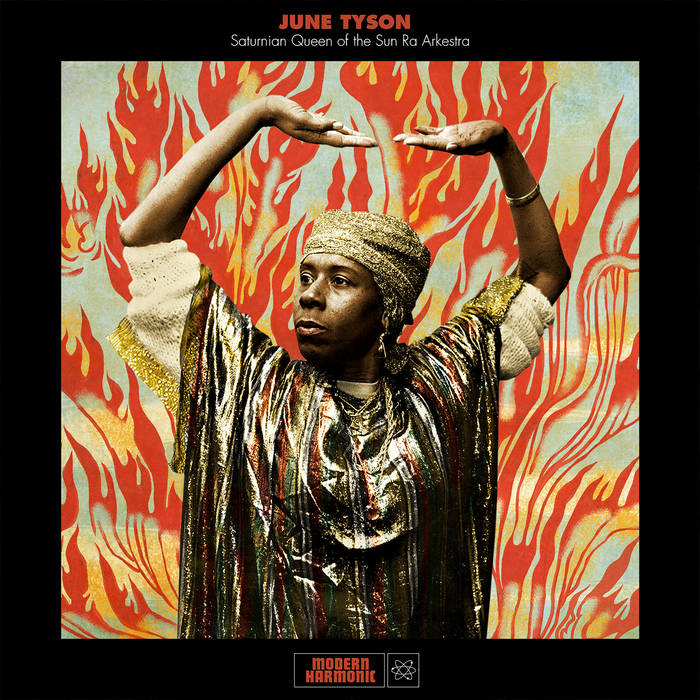
June Tyson: Saturnian Queen of the Sun Ra Arkestra
Like all good universes, that of Sun Ra is ever-expanding. The new release featuring June Tyson is a treasure trove of classics and unreleased goodies. Her splendid voice was the guiding light of the Arkestra throughout the last 30 years of Ra's music. Her throaty, almost slinky vocal maneuvers gave life to Ra's cryptic lyrics like no other. Many of the high points of Ra's extended cosmo-dramas come from Tyson and Ra's call-and-response (or is it call-and-repeat?) declamations. This compilation focuses more on the songs, and ends up being a kind of "greatest hits" for this side of Ra's music. Key versions of several of these songs come from the soundtrack to the film Space Is the Place, but the real juice comes from hitherto-unreleased concerts, especially three tracks from Delft,  1971, as well as "Never Never Land" and "Lost Horizon," both from Columbus, Ohio, in 1985. The sound quality is excellent--here's hoping more from these shows can be released!


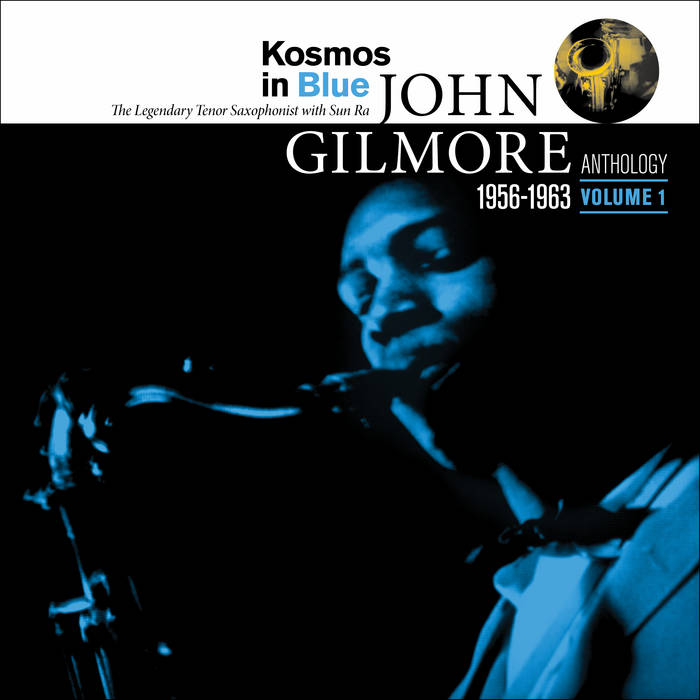
Kosmos In Blue: A John Gilmore Anthology, Vol. 1
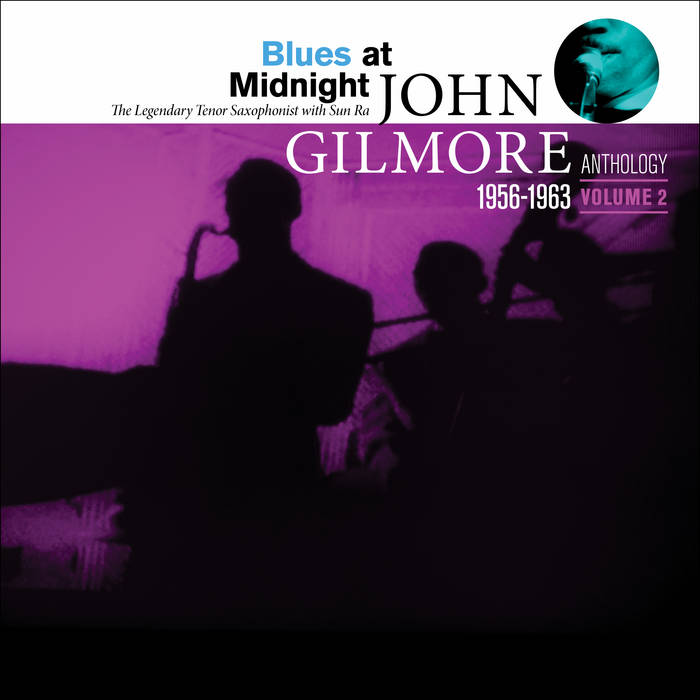
Blues at Midnight: A John Gilmore Anthology, Vol. 2
I stayed away from these two Bandcamp compilations featuring John Gilmore when they first came out since I was deeply enmeshed in sorting out my list of Gilmore top solos. Both of these releases are excellent outings featuring Gilmore's work in the '50s and early '60s. As to be expected, there is some overlap with my list, but not as much as you'd expect. That just goes to show how wide-ranging and deep the extent of Gilmore's soloing is.

If you're already a hardcore Gilmore fan (and if you aren't....why not?), you already have classic tracks like "Kosmos in Blue" and "Search Light Blues" in your collection. The draw here is the spruced-up sound and the context. Besides the selections being spot on, the pacing and sequencing of the lineup works really well; both of these albums are solid romps through Ra's '50s-'60s catalog, with healthy doses of Gilmore solos along the way.

The real highlights for me, though, are the previously unreleased alternate takes and pieces that showed up as bonus tracks on recent reissues, of which there are several. Chief among these are "Motherhood" and "Chicago, Southside," both from the second volume. "Motherhood" is a lovely ballad with a typically penchant Gilmore solo, while "Chicago, Southside" is a blues romper with Gilmore wailing and conversing with the stars: a brilliant solo not to be missed! "Blues from Saturn" also features a great solo, a perfect encapsulation of Gilmore's lyricism and phrasing. "Motherhood" and "Blues from Saturn" first appeared on the Bandcamp release Transitions 3: Chicago to New York, while "Chicago, Southside" first showed up as a bonus track on Art Forms of Dimensions Tomorrow, which places it as a Choreographer's Workshop recording. To repeat: absolutely essential.

Sun Ra's legacy continues to be in good hands with the worthy efforts of Irwin Chusid and Michael D. Anderson...

Thursday, January 3, 2019

John Gilmore's Greatest Sax Solos (Part 2: The List)


(If you missed it, please see Part 1 for the Introduction!)

Here, then, is my list of 61 of John Gilmore's all-time greatest solos. My criteria? Simply that the solo blows me away. I'm easily swayed by melodic beauty and rhythmic dexterity, but I am also swayed by technical wizardry when it's in service of the piece, and the timbre of multi-phonic industrial street sweepers in outer space thrills me, too--Gilmore satisfies it all.

I have stuck only to Gilmore's playing with Sun Ra. As I said in Part 1, I believe his best playing was with Ra, no doubt about it, as satisfying as his relatively brief tenures with others can be. Any list of his playing outside the Arkestra only serves to dilute the main body of his work, falsely setting it up as equal to his work with Ra, which it most assuredly is not.  Maybe someday I'll put together a list of my favorite non-Ra Gilmore solos (I'm partial to his work with Andrew Hill)--or maybe you will (if you do, let me know)--but this list is devoted to Ra, and there's plenty to choose from.

Gilmore was always Ra's prime featured soloist.  You could make a case for Pat Patrick getting there first and earliest--he began taking it out earlier than Gilmore, I believe--but once Gilmore caught fire there was no putting him out. And why would you want to? Almost every version of "The Shadow World," one of Ra's most-played compositions, contains an incendiary, life-altering, mind-blowing solo from Gilmore. Featured night after night, Gilmore never fails to satisfy. That being said, some solos speak more to me than others. I figured I might as well get the absolute greatest over first--"Dancing Shadows," from Nothing Is...-- but after that, the list is chronological.

I am leaning heavily on my forebears here, particularly Robert L. Campbell, co-author with Chris Trent of the definitive Ra discography Earthly Recordings of Sun Ra (2nd ed.). After Gilmore died in 1995, Campbell put out a detailed list, on the Sun Ra Saturn listserv, of significant Gilmore solos charting his development. It's damn good--you can find it in the Comments section here. Of course there's duplication, but the difference is that his list is trying to demonstrate Gilmore's growth and development over his whole career, while I am more interested in getting down on paper (so to speak) my all-time favorites. So there's overlap, but also lots of differences. Another point: a lot of Sun Ra music has been released since 1995, and that invariably includes some incredible Gilmore solos unavailable to Campbell at the time he created his list (I'm thinking particularly of the 1966 "Space Aura" from the Art Yard release of the same name).

I also owe a huge debt to Rodger Coleman and his Sun Ra Sunday essays. Rodger's writing, working his way through Ra's oeuvre from 1962 to 1978, is truly inspiring and has certainly helped clarify my thinking on much of this music.

Finally, please don't be disappointed to see that there are no links here to the actual music. Many of these solos can be found at the Sun Ra Bandcamp page, expertly curated by Irwin Chusid. Links to YouTube or Spotify are notoriously fickle. You all can use Google as well as I can. Happy hunting!

John Gilmore's Greatest Sax Solos: The Top 61

1. Dancing Shadows (1966-05-18) Nothing Is...

Let's just get the suspense over with and declare this the greatest Gilmore solo ever. This solo has just about everything I love about his playing in it: his angular phrasing, his muscular tone, his utter command of super-fast runs and high-register pyrotechnics, his sense of drama and pacing (what an entrance!), his devastating swing. The pace of this live version is a bit slower than the rocket ship speed of the original version (from When Sun Comes Out), but that's not a liability--at all. Gilmore inhabits this space as if he were born to it, and with the propulsion of Clifford Jarvis behind him, he soars. In his excellent piece on Gilmore from the much-missed blog Destination: Out, Oliver Trager said:
 What is it about Gilmore's sound that is so gripping? It swings and yet it is so out -- simultaneously tormented and lovely, dusky and bright, experienced and naive, grounded and airborne, primitive and modern -- an angel/demon glad to be unhappy.
Don't know about the "unhappy" part--this solo sounds pretty damn joyous to me--but it's a great question regardless. After working my way through massive amounts of his playing to compile this list, I still don't have the answer, not really, as much as I have tried to dissect and analyze his power.

2. Possession (1956-07-12) Jazz by Sun Ra [Sun Song]

This splendidly arranged ballad is a feature for Gilmore at his most huskily lyrical as he solos over an interesting bed of Ellingtonian chord changes.

3. Plutonian Nights (1958 or 1959) Lady with the Golden Stockings (The Nubians of Plutonia)

One of Ra's most misterioso compositions, with a mood that not's foreboding but compelling, "Plutonian Nights" features a Gilmore solo that reinforces that mystery. Similar to his solo on "Discipline 99" in its simplicity and limited range, this one is a perfect example of how much he could say within a constricted palette.

4. Space Aura (1959) Rocket Number Nine Take Off for the Planet Venus (Interstellar Low-Ways)

This early studio version has the same swinging feel as "Rocket No. 9" from the same album. Ra retained this approach for this composition throughout the sixties (although not always as fast as this version). Gilmore is in tight from the get-go, his driving solo strongly related thematically to what he'd do live at the Wonder-Inn the next year. He's in fine form, singing and swinging, with some nice long tones accentuating his melodic treatment.  

5. Rocket No. 9 Take Off for the Planet Venus (1960-06-14) Rocket Number Nine Take Off for the Planet Venus (Interstellar Low-Ways)

The first appearance of this Ra chestnut is radically different from its subsequent appearances as a single and as a Blue Thumb album track. Here, the song is a hard-driving post-bop barn burner, and Gilmore's solo fits right in that context, although he takes it to a different plane than most other saxophonists were doing at that time. It's often cited as one of Gilmore's prime solos. His lines cascade and ripple over a hard-swinging vamp from Ra's piano. He's beginning to break up the rhythm into more jagged lines while still emulating the sheets of sound associated with Coltrane.

6. Space Aura (1960) Music from Tomorrow's World

Played live at the Wonder-Inn in Chicago before an enthusiastic crowd, this version of "Space Aura" clips along at a brisk pace, and when Gilmore rips into his solo, you can hear the fabric of space straining to be ripped open. You can also hear a bit of what inspired Coltrane so much in Gilmore's playing in 1961, as Gilmore rides on simple two-note patterns and expands to cover the whole range of the horn, jumping octaves and generally whipping the whole scene into a frenzy, all in a short hot minute or so.

7. Search Light Blues (1961-11 or -12) Bad and Beautiful

The title is evocative of a lone beacon in the night, casting its beam through an otherwise dark and empty universe. Gilmore's solo is like that beam, reaching out as a ray of light for others to follow. Ra's lushly laid chords provide just the right backing for this lonely, yearning excursion into a noir landscape of a single searchlight beckoning in the dark. Gilmore has gone on record as saying this is his favorite tune from the first batch of Evidence reissues. David Block quotes him as saying that "it is often difficult for him to express himself and 'Search Light Blues' was a rare time when he was able to do so" (David Block, "John Gilmore," Jazz Journal International, 1994). He certainly does express himself here--his tone is at its burnished, yearning best and his melodic and rhythmic ideas cohere to construct a masterful statement. If this doesn't move you, nothing will and I can't help you.

8. Kosmos in Blue (1961-11 or -12) Art Forms of Dimensions Tomorrow

This Choreographers Workshop recording is an excellent example of Gilmore's command of the swing vocabulary, as colored as it is by his very personal timbre and attack. He starts off with short disconnected phrases that cohere into a massive statement of swing. The solo is actually split in two, separated by a bass solo, a second piano solo, and a short drum break. I love the phrases Gilmore comes up with when he comes back in, as he outlines what amounts to a late thematic statement.

9. Lights on a Satellite (1961-1962) Art Forms of Dimensions Tomorrow

The recording of this piece, with its mysterious quality and its incredible piano solo, epitomizes the ambient Choreographers Workshop atmosphere of otherworldly space. Gilmore's solo sharpens the yearning atmosphere of the composition, fading into eternity.

10. Dark Clouds with Silver Linings (1962) Out There a Minute  

A beautiful Choreographers Workshop piece, with the main melody line stated by Gilmore, the sax solo is a beautiful encapsulation of his yearning Chicago sound. Broken in half by an inspired piano solo, Gilmore's playing returns inspired in turn and with some of his most beautiful playing ever.

11. What's New? (1962) What's New? [Sub Underground Series II]

Here's a classic example of Gilmore's "early" style: straight-ahead hard-bop swinging with nary a hint of the future to come. His phrasing is logical and succinct, and it's easy to hear the appeal he must have had for Ra.

12. Wanderlust (1962) What's New?[Sub Underground Series II]

On this beautifully arranged waltz, Gilmore's voice is yearningly searching outward as he unfolds line after keening line, even as the solo is over before you know it.

13. Autumn in New York (1962) What's New?[Sub Underground Series II]

A deeply beautiful rendering of this standard, set up by a gorgeous Ra piano solo. Gilmore's smokey, evocative tone is in full force here, crooning the late-night Chicago wind (despite the subject of the song's title) like no other. Rodger Coleman does this solo justice:
The Arkestra drops down to a quartet on the hoary old chestnut, “Autumn in New York.” But don’t be fooled! After a lushly romantic opening piano statement, Gilmore plays one of the most breathtakingly heart-rending solos of his long, brilliant career! He starts out by teasing the melancholy melody with spacious, wide-open phrasing, slowly building to register-spanning exclamations, delicate filigrees, and pathos-filled one and two-note worryings. Every note is just exactly the right note at the right place and at the right time. As if awestruck by the sheer beauty of Gilmore’s playing, the band drops out during the second chorus, leaving him to blow an acappella cadenza that miraculously holds the thread of the tune while overflowing with prodigious, risky invention. Suddenly, Ra enters with an (almost) incongruous double-tempo section that slows down just in time for Gilmore to re-state the theme with the kind of stately grace and tender emotion that marked his opening choruses. This track demonstrates that, despite his (well-deserved) reputation as an altissimo-fueled avant-garde noisemaker, John Gilmore was truly one of the great post-bop saxophonists of all time. This version of an over-familiar standard has to be heard to be believed. Incredible!
14. The Idea of It All (1963) When Angels Speak of Love

Another convoluted, accelerated post-hard-bop theme played insanely fast by Gilmore and Walter Miller, backed by the power rhythm section of Ra, Ronnie Boykins, and Clifford Jarvis. "The Idea of It All" is very similar to the quintet version of "Dancing Shadows." Gilmore's solo matches the pace, and he really lays in for mighty runs and swoops up and down the range of the sax.

15. Sketch (1964) Other Planes of There

This attractive, convoluted hard bop melody was only played twice as far as the recorded evidence goes (so far): buried in the middle of the 1971 London concert, and this 1964 Choreographers Workshop track. "Sketch" is most notable for its absolutely killer Gilmore solo, which runs circles around the melody at ever-faster speeds as he launches off into the cosmos. Dan Plonsey says that this solo
includes three features which are often present in his inside/outside solos: (1) phrase fragments which outline minor seventh chords (2) use of very rapid blurs of repeated notes (3) continuous development, or variation/development, by which I mean he plays a short phrase (3-6 notes), plays it again but with minor changes: a note is added, another one or two dropped. (Dan Plonsey, "Other Planes of There," http://astron.berkeley.edu/plonsey/sunra/OP.html)
16. Worlds Approaching (1965) Strange Strings

For some reason this track gets neglected in reviews of this album, I guess because of the unique "strangeness" of the strings tracks that make up the majority of the LP. That's too bad, since "Worlds Approaching" is a masterwork that wouldn't have appeared out of place on one of the Heliocentric albums. After a keening oboe journey from Marshall Allen and a percussion sequence that solidifies the tympani-driven, ominous mood, Gilmore makes a magnificent entrance with fast, slightly angular patterns and dramatic pacing, with the tension exaggerated at the end by Tommy Hunter's reverb effect, used in striking fashion to take the solo into true outer space. Note: the iTunes/Bandcamp stereo version does not include this effect; it only appears on the original mono version.

17. Sun Ra and His Band from Outer Space (1966-05-18) Nothing Is...

Based on the number of solos in this list coming from the 1966 New York tour, you could say that 1966 was a peak year for Gilmore--and you'd be right. Maybe after his foray with Art Blakey in 1965 and his subsequent return to the fold, he was more than ready to make glorious comprehensive saxophone statements right and left, cementing his place in jazz history as one of the foremost practitioners of the tenor sax. He tears into his solo here with typical force and majesty, breaking up into fragmented statements and phrases as the rest of the band drops out, gliding into the high register as Ra joins him on piano. Simply fantastic.

18. Velvet (1966-05) College Tour Volume One: The Complete Nothing Is... (disc 1, track 7)

This Ra post-bop standard is played much faster than the original version from Jazz in Silhouette. After a trombone solo and a short compelling baritone sax solo from Pat Patrick, Gilmore jumps right in, ripping into his solo with frenzied abandon, reinforcing my notion that something must have been in the water for this tour. He's all over the place and yet intensely focused: super-fast runs all over the horn, jagged rhythmic variations, sheets of sound with holes in them. For a little while the whole rhythm section drops out except for slight accompaniment from Clifford Jarvis on drums--they're all probably in awe there on the bandstand.

19. The Satellites Are Spinning (1966-05) College Tour Volume One: The Complete Nothing Is... (disc 2, track 1)

There aren't too many examples, I think, of Gilmore soloing in this composition as extensively as he does here. His short solo starts off boldly, then moves to more complex statements as Ra stays with him on one chord with subtle variations, in an aural equivalent of satellites spinning in place--and in space.

20. Space Aura (1966-05) Space Aura

Like "The Shadow World" and "Images," "Space Aura" is one of those Ra compositions that seemed perfectly suited to Gilmore's athletic saxophone prowess, and it always elicits a powerful statement from him. Here's a brilliant killer-diller of a solo, another in the long line of masterpieces from the 1966 tour. Beautiful, blindingly fast runs, a languorous but solid tone, angular, unusually articulated rhythms--it's all here in spades. Gilmore is really tapping into the shadow world here, sending back cosmic messages of otherworldly ecstasy.

21. Saturn (1966) Pictures of Infinity

In this live version from sometime in 1966, you can hear the band get loose with the arrangement; there's a bit of added syncopation in the head that's quite attractive, and the ensemble lines are more ragged than on earlier versions. Anchored and punctuated by Clifford Jarvis's irrepressible bass drum accents, Gilmore delivers a sinuous, flowing solo heavily steeped in Coltrane territory.

22. The Perfect Man (1969-11-12) The Singles

An irresistible groove, a quirky hula-hoop twist-in-outer-space melody, and wacky Moog lines make a perfect setting for Gilmore to deliver a sinuously funky solo, one of his finest.

23. Space Aura (1969 or 1970) Slug's, NYC

It's interesting to compare Gilmore's approach to his solo here to the version listed above from three or so years back, in 1966. Each is stunning in its own right. Here, it starts out as pretty much hard-bop swinging, with Gilmore's particular angular phrasing and solid tone, with short fast runs interspersed with longer, almost funky lines. But that doesn't even begin to convey the absolute gorgeousness of his playing--he just swings hard and doesn't stop. Similar to Coltrane, there's a lot of self-call and response stuff going on here as he repeats phrasing and shifts it as he goes. As the solo continues, the lines get faster, and he moves into the high register for more stratospheric lines that you can hear piercing through space and swooping back to earth with low gutbucket landings.

24. Pleasant Twilight (1970-07) Live At The Red Garter

According to Earthly Recordings, this is the only extant live recording of this cooker of a composition, which otherwise only appears on My Brother the Wind, Vol. 2. In that version, Gilmore's solo during the slowed-down rendition of the head is almost tentative. Here, though, no sense of hesitation is present as Gilmore delivers a masterpiece of a solo. It's a perfect statement of emotion and passion packed into succinct, elegant phrasing ranging over the entire range of the horn.

25. The Shadow World (1970- 08-05) Nuits del Fondation Maeght Vol. 1

"The Shadow World" is a signature tune of Ra's, played almost as frequently as "Space Is the Place" and "Love in Outer Space." And on almost every version I've heard, there's room for a killer Gilmore outing, sometimes as an unaccompanied feature, sometimes over the beguiling 7/8 rhythm. Here, it's both, and he comes in wailing in the high register, beefing it up with low-end honks while generally hovering at the top: high, high energy which gets even higher as the band drops out for an extended a capella ride. This pattern would pretty much repeat through most versions, but would never get stale.

26. Another Shade of Blue (1971-08-17) Universe in Blue

Ra's jump-blues organ kicks off this extraordinary live jam that would not have been out of place on the organ-driven side of My Brother the Wind, Vol. 2. Gilmore solos throughout the entire eleven-minute piece (making it one of his longer recorded solos), starting off with bluesy muscular riffing accompanied by Ra's funky organ comping. It's a groove. Gilmore swings relentlessly and effortlessly, a master of his craft. About halfway through he starts sneaking in forays to the stratosphere--a hint of things to come. The horns begin riffing behind him as he continues to blow and, amazingly, knuckle down on the groove. As the solo's intensity increases, around the 9:50 mark he departs for the high register and doesn't let up for the duration. As the piece fades, Gilmore's solo fades with it, wailing into the eternity of the sweat-drenched night.

27. Intergalactic Universe (1971-08-17) Slug's, NYC

This composition, usually appearing under the title "Intergalactic Research," is not to be confused with the composition of that name that is on Continuation. "Intergalactic Universe" was referred to with this name by Ra in a rehearsal from Oakland in 1971. It is a mysterious piece in that it never appeared on any of the "official" recordings released during his lifetime. There are five recorded appearances, luckily, one of them the aforementioned rehearsal run-through, the others from live performances around 1971 or '72, after which it disappears from the repertoire. A shame, that, because it's a strong soul-jazz piece with most versions featuring an extended Gilmore solo. They are all worth seeking out, but this one, from the same session at Slug's that resulted in Universe in Blue, is primo. Guided by Ra's organ comping with the head beautifully executed by Gilmore, Gilmore then proceeds to play gorgeous variations, sounding simply fabulous, starting off with the long tones of the melody and building from there. The solo ranges all over the place, with extended bouts of dazzling high-register polytechnics. It's also another super-long solo, going on for a glorious nine minutes before repeating the head, followed by another couple of minutes of blowing and a solo climax after the band drops out. Sheer bliss, this one!

28. The Shadow World (1971-11-11) Delft

Another powerful version of this key composition. After the energetic head, Ra throws down the gauntlet with a keyboard solo, taken up first by a short burst of fire energy from Marshall Allen, and then (with baritone sax holding down the bass line) by Gilmore launching into a no-holds-barred outpouring of high-intensity upper-register energy. As the baritone sax drops out, Gilmore continues with his full-on assault. Devastatingly beautiful.

29. Discipline 99 (1972-05-07) Astro Black

A perfectly constructed solo, again showing Gilmore's lyrical side. No fast runs or high-register playing here--instead, he build a perfect solo out of a limited note choice and range, using long tones with soul and feeling. Simple but beautifully presented.

30. Pan Afro (1972-10-19) Discipline 27-II

Once again, I can do no better than to quote Rodger Coleman on this brilliant solo: "John Gilmore delivers a sure-footed and soulful solo with the kind of deeply penetrating tone that rivals Coltrane at his most intensely spiritual." The tune, with its loosely shifting grooves and killer melody, is a perfect vehicle for Gilmore's statement.

31. Of Mythic Worlds (1972 or 1973) Of Mythic Worlds

Gilmore is featured over an attractive percussion/organ setting reminiscent of "Song No. 1." He investigates lines of query, stating and reworking those lines, often very fast, while slowly but surely working his way up to the high register before reworking the same fast lines down low. After a short organ solo, he then returns with a vengeance and cranks it up several notches.

32. Thoughts Under a Dark Blue Light (1973) Cymbals

Backed by slinky organ, this funky groove is the perfect setting for Gilmore, and he more than rises to the occasion with a blistering solo. It starts off almost ominously, developing into a string of marvelously articulated dynamic runs and soulful high-energy patterns.

33. Sunrise in the Western Sky (1973) Crystal Spears

More of an extended concerto for tenor saxophone than a single solo, this lengthy piece establishes a vaguely eastern setting (with the help of Marshall Allen's oboe lines) with an otherworldly ambiance from Ra's keyboards for Gilmore to weave in and out of, quietly soloing, often with long, plaintive tones. There's certainly nothing else like it in Ra's oeuvre. It's slow, and doesn't really develop or go anywhere. It just is... and Gilmore plays differently that he ever has before or since, focusing more on long tones, often in the lower register, rather than jagged, "jazzy" lines. It is darkly beautiful. I really like Gary Giddins' description:
John Gilmore's tenor saxophone solo may strike you as chaotic and ugly or (as I prefer) elliptically anguished, but it is unlike any other solo that comes to mind. Instead of a sustained burst of energy, it cries out in bellowing spurts interrupted by long caesuras, building not so much in intensity as in stubbornness. The rhythm section sustains an Africanate swingless tableau while Gilmore wails, disappears, return sand aches, wanders off, returns again and shrieks, rages, wags his finger, then finally leaves while the rhythm follows an imperviously cool eight-beat into infinity or at least until cymbal crashes bring it to ground. (Gary Giddins, "Saturnal Sorcery (Sun Ra)," in Weather Bird, 2004, p. 281)
34. Ombre Monde #2 [The Shadow World] (1973-10) Live in Paris at the "Gibus"

Gilmore comes in early on this (edited) version, high-register at first and without accompaniment but quickly moving on to alternating between low gutbucket tones and super-high stratospheric ones (favoring the latter) in a fierce duet with Ra on organ.

35. Song No. 1 (1974-08-17) The Antique Blacks

The setting for this piece (the only time it was ever performed, at least according to Earthly Recordings) is an attractively loping percussive groove and a Rocksichord theme. Gilmore leads in right away as some of the theme is stated, his powerful tones propelling the piece along as he quickly accelerates his lines and hits the high notes in piercing runs.

36. The Shadow World (1974-09-08) Jazz Showcase, Chicago

This is a short barn-burner version, with a brisk head and a really brief trumpet bit before Gilmore takes over with a sonic assault. The band drops out as he explores the spaceways, joined soon by an onslaught of percussion. The percussion drops out, and Gilmore keeps going. Devastating! Again, Rodger Coleman puts it much better than I do:
Then Gilmore takes over and—well, yes, it’s another a cappella blowout, but a particularly inspired one. Ra attempts to steer him back to the head, but Gilmore will have nothing of it. He continues to blow his brains out, ranging across the entire register of the horn (and beyond), capping it off with an astonishing display of multiphonic pyrotechnics. Wow! Gilmore is on fire! This elicits several outbursts of whooping and hollering and stunned applause when he finally finishes.
37. Images (1976-08-25) Châteauvallon, France

A fast rip-roaring powerhouse solo, typical for Gilmore, transcendental and mind-blowing for us! "Images" always featured Gilmore, and, like "The Shadow World," there are multiple versions to choose from for favorites. This is the earliest one on this list, and it comes from one of those shows (one of many, actually, but still) where Gilmore was on fire and could do no wrong. (As you can see, there are four solos on this list from this date!). Sun Ra knew it, and features him on solo after solo. Seriously, this entire performance is owned by Gilmore.

38. Velvet (1976-08-25) Châteauvallon, France

Gilmore's solo here is a great example of how he could jump start a solo with a swinging statement of a phrase, building on it in turn with variations and elaborations. This one unfolds in a killer display of speed and control. Massively brilliant!

39. Angels and Demons at Play (1976-08-25) Châteauvallon, France

After a blistering alto sax solo from Marshall Allen and a percussion interlude, Gilmore ups the ante with a full-on high-register solo of aggressive, punctuated energy, seeing Allen his own intense high-octane octave jumps and raising him miles high. Into the stratosphere!

40. Opus Springtime (1976-08-25) Châteauvallon, France

This is the first appearance of this appealing composition, featuring a lead line by Gilmore and a solo that develops directly from it. It bears repeating: this was a special show for Gilmore. He is just amazing in piece after piece--with no exceptions. Here, he starts off in high gear and doesn't let up for the duration.

41. The Shadow World (1977-11) The Soul Vibrations of Man

While it was fairly difficult to single out favorite Gilmore solos from all the versions of "The Shadow World," this one was a no-brainer. Gilmore's on high alert from the get-go. His supersonic playing most closely approximates Ra's sonic industrial vacuum cleaner synth sound here, with its overtones and controlled high-register squeaks and low-register undertones. He really rips into it, tearing open the space/time fabric.

42. Embraceable You (1977) WKCR marathon

Gilmore's classic take on classic standard is alive with the soulful Chicago air. He nails it in a damn-near perfect rendition. What a golden tone! What fluid ideas, what phrasing.... whew.

43. Images (1978-03) Live at the Horseshoe Tavern, Toronto 1978

Along with the 1976 Châteauvallon version, this is among the greatest Gilmore solos for this Gilmore vehicle. Two words come to mind for this one in particular: strength and purity.

44. Liza (1978) Untitled Recordings

This old Benny Goodman chestnut is given an ingenious rereading as Ra works with the band in rehearsal on his own arrangement, coming up with several clever backing statements for the horns. At one point early on he calls on Gilmore to solo, and Gilmore delivers, with a supercharged flurry of notes, some of the fastest playing of his I've heard. This must have been killer in concert with the whole band; unfortunately, Earthly Recordings doesn't list any other versions captured on tape.

45. Tone Poem #9 (1978) Untitled Recordings

Another gem from the same long rehearsal tape as "Liza," this piece is reminiscent of some of the "Discipline" compositions. Long, languid chords are played by the horns, with a plaintive melody that perfectly fits the mood of this beautiful piece evolving from those chords, voiced by Ra, who coaches the trumpet in the melody before calling out "solo, John." John responds all right, with an absolutely gorgeous solo that perfectly fits the mood of this beautiful piece. To the best of my knowledge, this is the only recording of it. As a side note, Tone Poem #9 is the quintessential example of the multiple stories we've heard about countless unheard Ra compositions, rehearsed but never otherwise performed. As Gilmore said in an interview with Art Sato:
Sun Ra's got so many arrangements he hasn't let them all be heard yet. The book is so vast that it's unimaginable the number of tunes we've got. Not even counting originals, we've got so many standards too. Some of the most beautiful music that's ever been written will never be heard anywhere but at a rehearsal. (Be-Bop and Beyond, March/April 1986)
46. Along the Tiber (1978-01-08/13) Other Voices, Other Blues

Gilmore's playing throughout the 1978 Italy stint, which includes two studio albums on Horo and several classic concerts (especially the one captured on Disco 3000), is consistently top-notch, but even among all those gems this solo stands out. It's a peppy post-bop swinger, and Gilmore comes in blazing with one of his characteristically Chicago-windblown angular but swinging melodic lines, which he then proceeds to tease and triangulate all too briefly before it's over.

You may wonder why there aren't more solos in this list from the Horo albums (Other Voices, Other Blues and New Steps). While Gilmore's playing is brilliant, there just aren't as many distinguishable "solos" as much as there are head/narrative threads that permeate each piece. Often, Gilmore stops just as he's getting going, with Michael Ray taking over. He makes strong, cohesive statements, but the whole is greater than the parts--and it's the parts I'm interested in here. I'm listing standout standalone solos, and on the Horos, Gilmore is playing more of an ensemble role. (Also worth noting is that the two Horo studio albums are among the best-recorded of Gilmore's playing ever.)

47. Third Planet (1978-01-23) Disco 3000

A relatively rarely-played composition, "Third Planet" was revived by Ra for his 1978 Italian quartet tour. Gilmore's golden solo in this is particularly solid and beautiful. His burnished tone elaborates and decorates the melody as he runs the changes, sticking mainly to the lower register and swinging like crazy. This is a prime example of Gilmore's mastery of phrasing.

48. Twigs at Twilight [Images] (1978-01) Media Dreams

This Gilmore feature is actually an excerpt from a version of "Images" played live on the Italian tour. The fact that Ra chose to edit it out of that longer context to highlight Gilmore's playing (as well as Ra's own piano solo afterwards) demonstrated that Ra knew a great Gilmore solo when he heard one. Ra often soloed immediately after Gilmore, as if he were directly inspired--well, aren't we all? Without the surrounding melody, the piece becomes a straight-ahead driving chunk of pure jazz blowing.

49. The Shadow World (1978-01) Media Dreams

A very short version (only 2:48!), this is basically a vehicle for Gilmore to wail over, in 7/8 time, and wail he does! Intense high energy all the way---then it's over. Obviously an incomplete take. How's that for a trenchant description?

50. West End Side of Magic City (1979-09-13) Omniverse

This is an especially appealing post-bop swing tune fueled by Ra's piano. It's a shame they didn't play this one more; its chorded framework provides a wonderful setting for Gilmore to build on with a short roaring exploration in swinging mainstream mode.

51. Unknown title (1979-11-24) Soundscape, NYC

This solemn piece starts out quietly, with vibes and moody piano and a suitably serious baritone sax solo (probably by Kenny Williams). Then, about four minutes in, in a solar burst of energy after some cosmic chords from the Arkestra, Gilmore breaks into an unaccompanied bright, blistering high-register solo reminiscent of  his "Shadow World" solo on Soul Vibrations of Man. Few other saxophonists of the "free jazz" era (or anytime else, really) play with such sustained dynamic intensity, high energy, and solar purpose.

52. Silhouettes of the Shadow World (1980-02-24) Sunrise in Different Dimensions

This Montreux set was with a stripped-down Arkestra, and on this version of this classic piece the head doesn't show up until the very end, after a typically kick-ass Gilmore solo. He comes in soaring in the upper octaves and builds from there for a sustained altissimo foray into the upper atmosphere.

53. Approach of the Eternal Tomorrow (1980-09-17) The Voice of Eternal Tomorrow

Unlike a lot of solos where he starts low, jazzy, melodic, building melodic fragments, then building up to the high-intensity high-energy stratosphere we know and love (as he does in "Dancing Shadows"), here Gilmore accelerates from the get-go and nails you to the wall with red-hot fire.

54. What's New? (1982-06-24) Mannheim, Germany

After a sprightly Ra piano solo, the big band swings in blaring, it's a great groove, and after more piano, a feisty trumpet solo, and a piano set-up, Gilmore takes over, punchy and aggressive, cutting across the rhythm with his own jagged sensibility while maintaining the swing.

55. Opus Springtime (1982-07-29) Manchester, England

In this upbeat version, Gilmore's solo builds on and expands the melodic line with fast embellishments, sheets of sound, and high-register intensity, swinging and taking it out as only he can, building up to a restatement of the head with a piercing high-note end.

56. Lights on a Satellite (1983-11-01) Milan, Zürich, West Berlin, Paris

This classic composition was often a showcase for Gilmore, and he usually took the lead melody as well, as he does here. His solo is a powerful embellishment of that melody, dissecting the rhythm in exciting ways.

57. What's New? (1983-11-01) Milan, Zürich, West Berlin, Paris

Gilmore always did a bang-up job on this standard. He's rollicking and rolling here, playfully embroidering the changes with inventive rhythmic embellishments--short and sweet.

58. I'll Never Be the Same (1984-10-11) Berkeley, CA

Here's another chestnut that's typical of the jump-style arrangements Ra gave to many standards later in his career, most of which featured Gilmore. Although Ra would often hold off on his solos until after Gilmore's on jazz songs like this, here he goes first. Ra establishes the mood with a powerfully swinging short solo, followed immediately by Gilmore. Sticking to the changes with fast swinging runs, Gilmore swings mightily.

59. Sophisticated Lady (1984-10-28) Washington DC

...and another fine demonstration of Gilmore's nailing a jazz classic, this time of course the Ellington standard. Ra's arrangement speeds up the tempo (he did much the same with "Body and Soul"), making it a fine fast-swinging framework for Gilmore's solidly golden tone and seemingly endless repertoire of swinging phrasing and fast runs as he soars through several choruses.

60.  Beautiful Love (1987-01-22) Philadelphia

A wonderful song with lyrics, sung by Ra, speaking of a longing for love unfulfilled. Gilmore's solo perfectly embodies that longing with his languid use of long tones and melancholy phrasing, while at the same time transcending that longing with the spirit of love fulfilled in space.

61. Sometimes I'm Happy (1988-09-30) Cambridge MA

Gilmore kills it on this fine version of a Ra favorite. An absolutely gorgeous statement.

*********************

So, there you have it! I hope you've enjoyed this journey into the cosmic world of John Gilmore's tenor saxophone playing. I also hope you've felt inspired to seek out this music and come up with your own list of favorites (and I hope you'll share them with me!).

As I said at the beginning, nothing tops "Dancing Shadows" in Gilmore's oeuvre. The rest of my list is chronological. However, for the end, I'll leave you with my list of tip-top favorites--the best of the best (again, in chronological order, except for the first):

Best of the Best: John Gilmore's 12 Greatest Solos:

1. Dancing Shadows (1966-05-18) Nothing Is...
2. Search Light Blues (1961-11 or -12) Bad and Beautiful
3. Kosmos in Blue (1961-11 or -12) Art Forms of Dimensions Tomorrow
4. Dark Clouds with Silver Linings (1962) Out There a Minute
5. Space Aura (1966-05) Space Aura
6. Pleasant Twilight (1970-07) Live At The Red Garter
7. Another Shade of Blue (1971-08-17) Universe in Blue
8. Intergalactic Universe (1971-08-17) Slug's, NYC
9. Thoughts Under a Dark Blue Light (1973) Cymbals
10. The Perfect Man (1969-11-12) The Singles
11. Liza (1978) Untitled Recordings
12. Twigs at Twilight [Images] (1978-01) Media Dreams

John Gilmore's Greatest Sax Solos (Part 1: Introduction)


John Gilmore with the Sun Ra Arkestra in Ann Arbor 1986 
(Peter Yates, CC BY-SA 3.0)


Charles Mingus' Mingus Dynasty and Santana's Caravanserai were my gateway drugs to jazz, but once I got hooked it was the saxophone that called the shots in my jazz addiction kingdom. Primarily Bird at first, and then after side forays into Ornette Coleman,Wayne Shorter, Eric Dolphy, David Murray, Jimmy Lyons, and Anthony Braxton (oh, yeah, and Coleman Hawkins, Lester Young, Ben Webster, and Johnny Hodges) (and Roscoe Mitchell and Henry Threadgill and Arthur Blythe) (and detours with Michael Brecker and Jan Garbarek), I settled on John Coltrane as my absolute fave, my jazz God. Yes, I had to have a "favorite"--I was very much taken with the concept of ranking. I had to be able to say Coltrane's the greatest. Whenever my mom would say to my baby daughter "Who's the greatest coach?" (her answer would be Dean Smith), I would always follow up with "And who's the greatest sax player?" Coltrane, of course.

The only thing is, my allegiance changed. I still love Coltrane deeply (after Live in Japan how could I ever stop?), as well as all those other players. But somewhere along the spaceways I realized that while Coltrane may have been the pinnacle, the mountaintop, I preferred being on the road--with John Gilmore. Gilmore speaks to my spirit in a way no other saxophonist (or, indeed, musician) does. Something in his tone, in the way he constructs his lines, the way he distorts time and timbre and transcends space, soothes my soul and brightens my spirit.

Of course, it's impossible to talk about Gilmore without invoking Sun Ra. Gilmore was the lead tenor sax player in Sun Ra's Arkestra for forty years. Asked by Graham Lock why he'd stayed with Ra for so long, despite fruitful side trips with Paul Bley, Andrew Hill, Art Blakey, McCoy Tyner, et al., Gilmore replied, "The wisdom, the learning. Being with Sun Ra is like--oh, tomorrow's newspaper headlines" (Lock, Chasing the Vibration, 1994, p. 162). Later in the same interview, he elaborated with a more musical answer: Ra is "unlimited in his ability to write challenging music--stuff that you maybe have to spend hours or weeks on just to get to it, to really play it. So you never get bored--the challenge is always there. … I'm not gonna run across anybody who's moving as fast as Sun Ra, so I just stay where I am" (Lock, p. 163). Like Johnny Hodges with Duke Ellington, or Jimmy Lyons with Cecil Taylor, Gilmore was never better than when he was with Sun Ra.

So how much of Ra's writing comes out in Gilmore's playing, particularly his solos? I think that Ra's spirit and sense of direction certainly pervaded Gilmore's playing, but it was a two-way street--maybe Ra paved it ahead of time, but Gilmore is driving on it, propelled by a hard Chicago wind that blows through the interstellar lo-ways.

At this point, it's worth quoting at length John Corbett's excellent summary of Gilmore's style, from his 1995 obituary of Gilmore:
While he is best known for his work with Ra amid the emergence of free-jazz and creative music, Gilmore had an important impact on much of the post-modal mainstream, in no small part through his influence on John Coltrane. A serious kink in the reductionist jazz historian's neck, Gilmore was at once a dedicated aural explorer and a bona-fide hard-bop giant… As influences, he cited Hawk, Bird and Pres, but also Stan Getz; he possessed a beautiful tone, played stunning ballads, but was also one of the most thorough investigators of saxophonic extremes, from slap-tongue to overblowing and harmonics. Neither all out nor all in, Gilmore exemplified the maintenance of tradition at the core of innovation. (Corbett, "John Gilmore dead at 63," Downbeat Nov. 1995)
I am limited in my ability to write about the technical, theoretical aspects of Gilmore's playing, but I can attempt to analyze those factors of his style that affect me emotionally: his tone, his structure, and his phrasing. Gilmore shares an acerbic tone, low on vibrato and strong and solid as granite, with Roscoe Mitchell, another prominent Chicago player. Of course, both Mitchell and Gilmore share the educating tutelage of Captain Walter Dyett. Where Mitchell delves into churning simultaneity and circular-breathing-driven dervishes of post-Coltrane acrobatics (as on The Flow of Things) as well as a cool sense of mathematical logic, Gilmore injects soul into the proceedings, while covering all the bases, from gutbucket honking and sheets of sound to outside squealing and heartfelt emotional swinging. His tone is rich and robust, marked by the extensive use of long tones, again with very little vibrato. There is something quite yearning and beautiful about his sound. His longer tones especially have a distinctive, almost keening quality, especially in his later years (perhaps this is what Robert L. Campbell meant when he said that "around 1976, he developed a Trane-like sag in his tone").

Gilmore was always a very structured player, in the sense that his solos often convey a strong sense of a beginning, a middle, and an end. They have a narrative quality, and they are very purposeful in their development of ideas. There were many opportunities for Gilmore to strengthen the structural aspect of his playing in Ra's repertoire, not only in Ra's focused originals, but in the many pop songs and jazz standards that were featured, especially those arranged by Fletcher Henderson and Duke Ellington. Most of these songs, particularly the Henderson ones, weren't stretched out; they retain the same tight arrangement and structure of the '30s three-minute versions they follow. Thus, Gilmore had a short time frame within each piece in which to solo. Almost all the extant versions of Ra recordings from the Fletcher Henderson repertory (such as "Can You Take It," "Hocus Pocus," and "Yeah Man!") include a short, concise jewel of a Gilmore solo, whether on tenor sax or clarinet.

In compiling this list of what I consider to be Gilmore's all-time greatest solos, I was struck over and over by Gilmore's versatility; he encompasses so much, from big-band swing and hard-bop blowing to smoky, late-night balladry, down-and-dirty blues, and total fire music, with piercingly burning high-register pyrotechnics--often in the same solo. He could go wherever Ra's music would take him, even to rock and roll and Disney tunes.

Gilmore was a master of phrasing, giving his solos a conversational quality. In so many of his solos, I hear him alternating long runs (ending in simple long notes) with more fragmented, short phrases. The effect gives his solos a colloquial character--it's like he's explaining something (the mysteries of the universe, perhaps). He starts with a simple statement, and then expands it, elaborating it. Little by little, he's expounding on it, more frequently and passionately. He's not preaching, but he is making his point with the finest rhetoric. This conversational quality, combined with his inherent lyricism, increases the substance of beauty so evident in all of his playing. Coltrane often hits you with sheets of sound, or takes a melodic kernel of a phrase and worries it to death, either of which can be exhilarating and mesmerizing. Gilmore can do both as well, but he is sparser in his delivery, holding back and releasing ideas as they arise developmentally in the solo.

A key aspect of his phrasing is what he called "rhythmatizing" his phrases. In explaining to Art Sato what it was about his playing that caused Coltrane to exclaim to him, "You've got the concept!" (back in 1961, supposedly resulting in the direction Coltrane took with "Chasin' the Trane"), Gilmore said:
It was about a different rhythm, the way I was rhythmatizing my phrases, instead of playing straight eighth or sixteenth notes. In New York, most of the cats were into playing straight with the exception of Sonny Rollins, who always played rhythmically. But me being with Sun Ra, I could take it off into something else in terms of rhythm. Having studied a little drums too, my rhythmic concept is a little different. That's why I was able to switch quickly from the eighth note, sixteenth note pattern and jump into something else when I realized that the other approach wasn't going to work. Very few musicians are trained to play like that. It's not easy because you're playing rhythmically and melodically at the same time. (Art Sato interview with John Gilmore, Be-Bop and Beyond, March/April 1986)
It's interesting that he mentions drumming here--not only was Gilmore an accomplished drummer in his own right (check out the albums My Brother the Wind Vol. 1 and The Night of the Purple Moon), but, as John Stubblefield said, "Well, one of the things I practice that John Gilmore turned me onto, is I practice out of drum books. The Louis Bellson ones. I practice rhythms, and study rhythm" (Tim Price interview with John Stubblefield, "John Stubblefield Insights" 2005). This strongly rhythmic phrasing aspect is a key feature of Gilmore's style.

For more on the substantial stylistic connections between Gilmore and John Coltrane, see this fascinating post by Ed Rhodes, Jr.

I'll close this introduction with another quote from Corbett:
Listen closely to three generations of Chicago saxophone players--[Von] Freeman, John Gilmore, and Henry Threadgill--and tell me whether you hear the family resemblance. Something deep links them, a common regional phraseology, a lurking accent that refuses to leave a native speaker's voice. (John Corbett, Microgroove: Forays into Other Music, 2014, p. 429)
Please see Part 2 for the actual list!